Jewelry Retailer Swarovski Increased Profits by 8% in Just 4 Weeks with Advanced Merchandising
Swarovski is an omnichannel retail brand under the umbrella of YALON, the official representative in Israel of the global Swarovski company. Their store includes a high-traffic online store and seven brick-and-mortar locations.
29%
Reduction of Non-Moving Inventory
18%
Increase in Overall Conversion Rates
8%
Increase in Profits over Four Weeks
Goals
- Increase sales while reducing non-moving inventory
- Reduce non-moving inventory without disrupting conversion rates
- Implement an advanced sorting strategy that takes multiple parameters into account
The Challenge
Swarovski needed to push their slow-moving inventory without decreasing exposure to bestsellers and disrupting their conversion rates and sales. However, their store is run on Shopify, so they could only use one parameter (out of a limited list) to sort their collections. Additionally, their sorting was being calculated over 'all-time', preventing them from optimizing their non-moving stock.
Ultimately, they needed to shift their slow movers by pushing them to the top of the collections pages, without risking decreased exposure to bestsellers hurting their conversion rate and sales.
In a nutshell: Swarovski needed to shift slow-moving inventory without disrupting bestseller revenue and overall conversion rates.
The Solution
To ensure Swarovski was able to move non-moving inventory while also increasing sales, Kimonix built a new, tailored sorting strategy for each of their collections: using multiple advanced parameters simultaneously: sales, conversion rates, days to finish inventory, inventory levels, and margins. Every parameter was ranked based on the business goals of each collection.
Creating a balanced, multi-parameter sorting strategy enabled Swarovski to display and expose both bestsellers and slow-movers. After this, we let our data-collecting AI and automation do the work to optimize these collections.
In a nutshell: We tackled their challenge in three steps:
Explore Kimonix ecommerce merchandising →
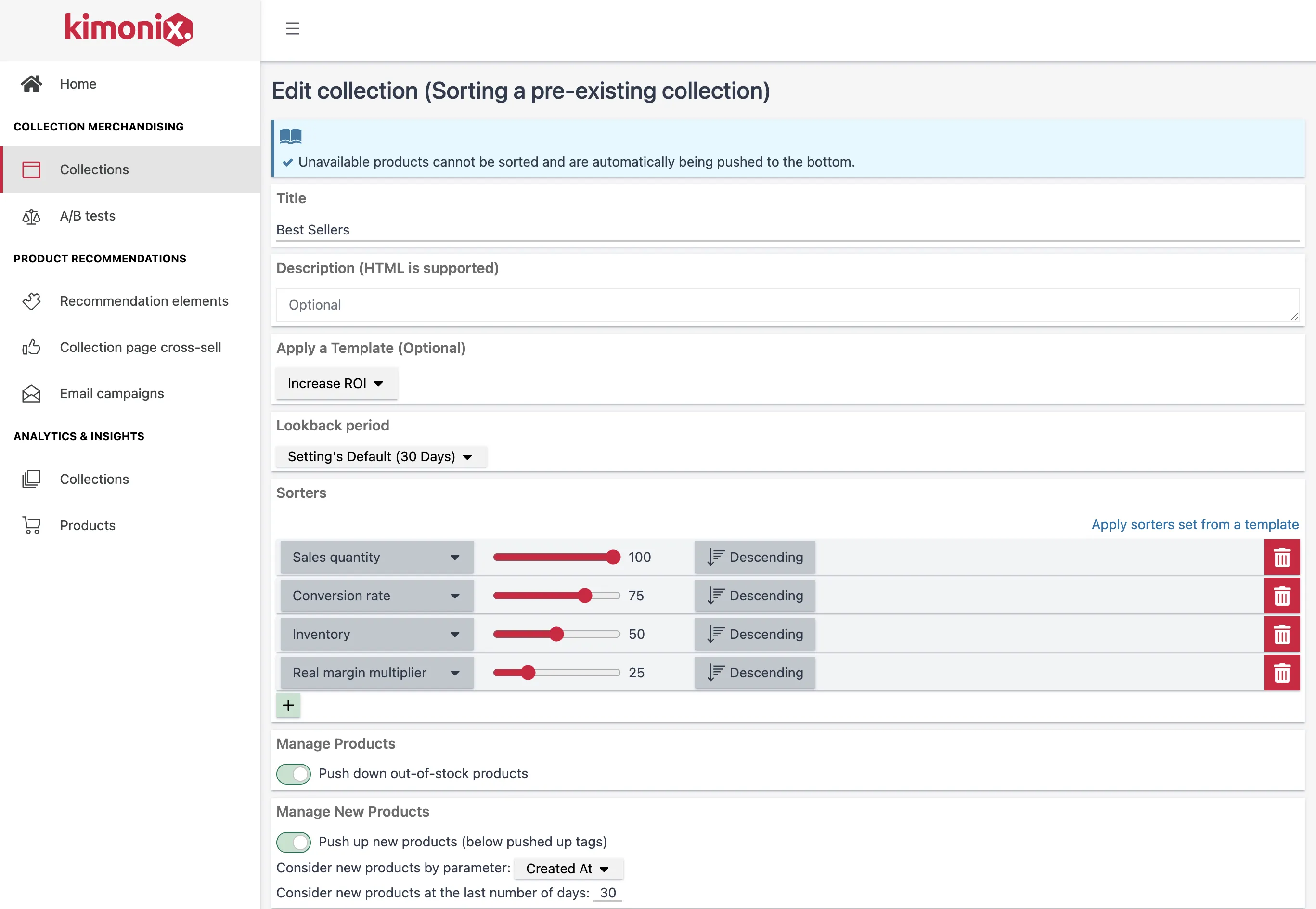
- Created a multi-parameter sorting strategy for their collections
- Established the influence of each parameter based on the business goal of each collection
- Used advanced AI to continuously optimize collections based on real-time data
The Results
After four weeks, Swarovski achieved a 29% reduction in non-moving inventory, a 72% increase in daily sales rate of top 10% products by inventory volume, an 18% increase in overall conversion rates, and an 8% increase in profits.
Conclusion

★★★★★
“Kimonix is a truly amazing product. It helped us increase conversion rates by 18% and reduce non-moving inventory by 29%! The team is there to support us with everything we need.”
Natalie
Director of eCommerce, Swarovski
Key Takeaways
8%
Increase in Profits over Four Weeks
After four weeks, Swarovski achieved a 29% reduction in non-moving inventory, a 72% increase in daily sales rate of top 10% products by inventory volume, an 18% increase in overall conversion rates, and an 8% increase in profits.
- 29% reduction of non-moving inventory
- 72% increase in daily sales rate of top 10% products by inventory volume
- 18% increase in overall conversion rates
- 8% increase in profits over a four week period
Frequently Asked Questions
What results did Swarovski see in four weeks?+
Profits rose 8%, non-moving inventory fell 29%, and overall conversion rate increased 18%, all within a four-week window. Moving stock that was not selling while conversion rose means the gain did not come from discounting.
How did Swarovski cut non-moving inventory by 29%?+
By making stock position a sorting signal, so products sitting still were surfaced to shoppers likely to want them instead of staying buried. The alternative, discounting to clear, costs margin; re-merchandising does not.
Can merchandising reduce non-moving inventory for jewelry brands?+
Yes, and it is usually cheaper than the alternatives. Slow-moving stock is often a visibility problem rather than a demand problem, and markdowns solve it by giving away margin. Swarovski reduced non-moving inventory 29% while increasing profit 8%.