Brand or Data? How Goldbergh Increased Conversion by 22% Running an A/B Test
Goldbergh is a premium ski and outdoor fashion brand known for its bold aesthetic: rich color stories, distinctive patterns, and a visual identity that's as much a part of the product as the fabric itself. For Goldbergh, color and pattern logic aren't decorative decisions, they're how the brand communicates its identity to shoppers.
+22%
Conversion Rate Increase
+17.6%
Revenue Growth
+15%
Sales Quantity Increase
Agency Partner
Not Selling Liquid
We build, manage, and grow fashion brands
Not Selling Liquid is Goldbergh's agency: a certified Shopify Premier Partner that builds, manages, and grows purpose-led fashion brands. They designed and run Goldbergh's storefront, working alongside Kimonix's data-driven merchandising to power the collections behind it.

“For a luxury brand as distinct as Goldbergh, the digital experience has to be as premium as the product. We rebuilt their storefront from the ground up: fully custom, designed and optimised front to back. The real craft is making aesthetics and performance work together rather than against each other, and that's the standard we build to.”
Silke van Mourik
Head of E-commerce, Not Selling Liquid
Brand Aesthetic or Data: Which Should Drive Collection Sorting?
Goldbergh's marketing and creative team had mostly sorted collections by aesthetic logic, and with good reason: the brand is the visual experience. But the e-commerce team had a persistent question nobody could answer cleanly: was the aesthetic sort actually helping conversion, or were they just assuming it was?
Without proof either way, every merchandising decision came down to whoever made the loudest case in the room. The challenge wasn't choosing between aesthetics and data. It was figuring out whether the two could work together, and what that would actually look like in practice.
The Solution
An A/B test was designed to answer the question directly: does aesthetic sorting hurt conversion, and if so, can the brand's visual logic and data-driven ranking coexist?
Explore Kimonix A/B testing and merchandising analytics →
Test: Brand Aesthetics vs. Kimonix Data Sort
A clean head-to-head A/B test. After 30 days, the data was already conclusive.
Variation A used the marketing-led approach, organizing the collection by color story and pattern logic. Variation B used Kimonix's data sort, products ranked by performance parameters set up with the Kimonix team. Same products. Same traffic. Different order.
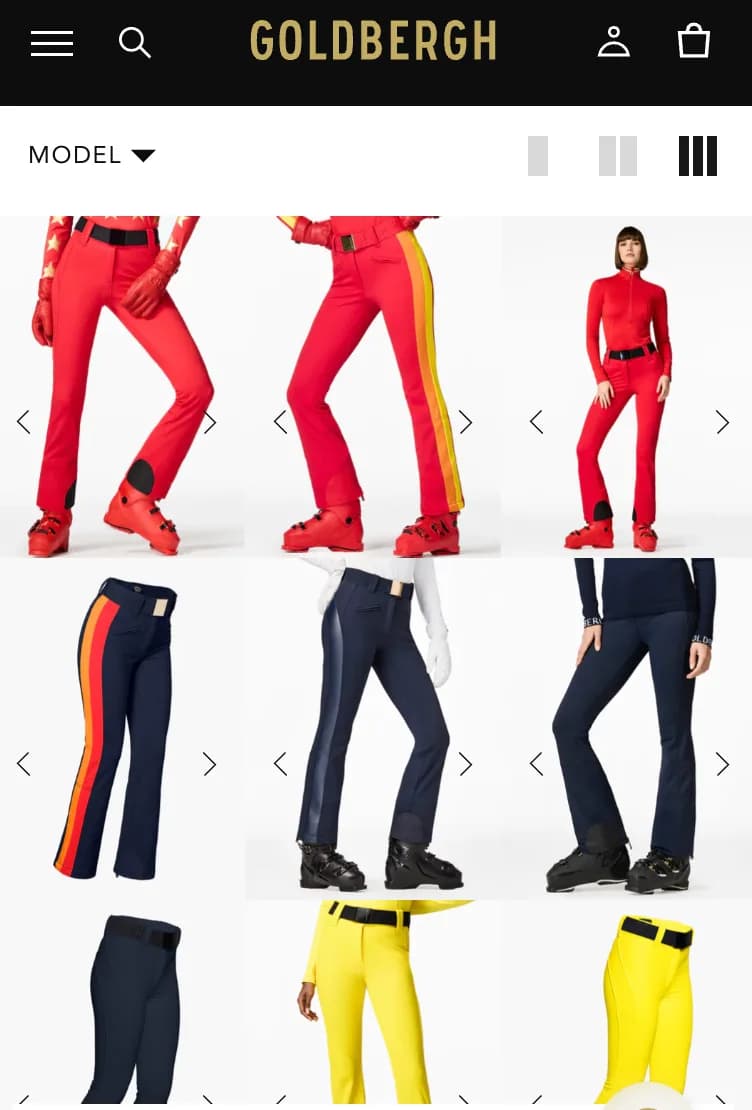
Variation A:
Aesthetic sort, color and pattern logic
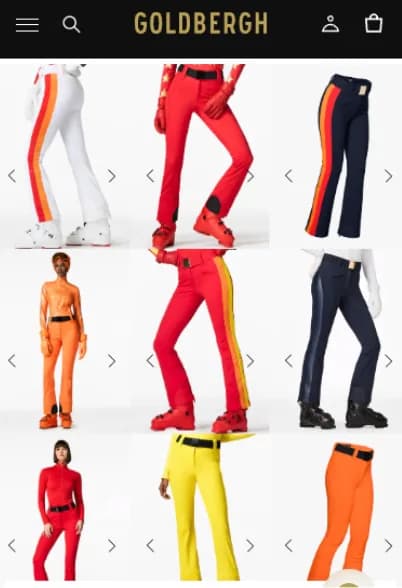
Variation B:
Data sort, ranked by performance parameters
The Kimonix data sort won across every metric. But Goldbergh's response wasn't simply to switch to a pure data sort and move on. Color and pattern are how the brand tells its story.
So the team asked a better question: could they keep the aesthetic logic and use the data within it?
The Answer: Aesthetics + Data, Together
The answer is yes. Fashion brands are defined by aesthetics and preserving their visual identity. If a platform can't make aesthetic and data work in tandem, that's a glitch in the system.
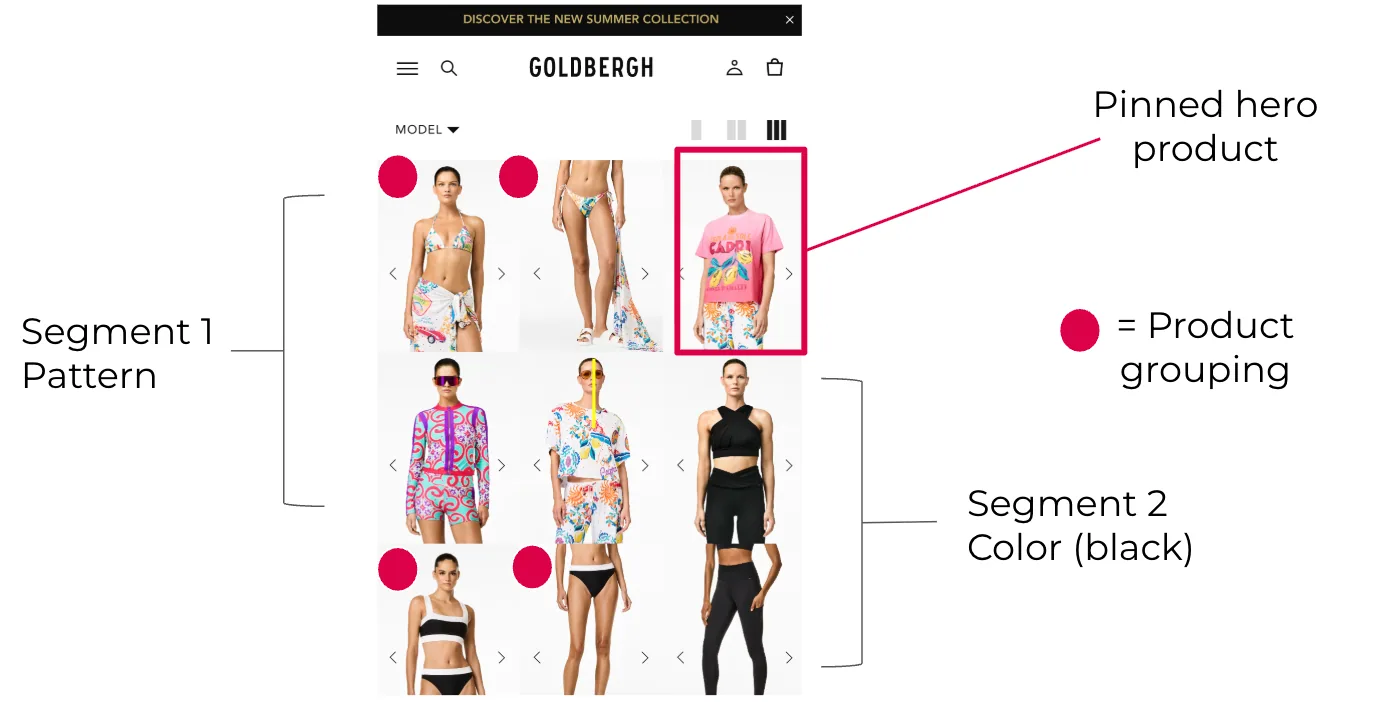
Goldbergh created segments within their collections based on the visual aspects they value most, color and pattern. Within each segment, Kimonix sorts products automatically using multiple data parameters.
The approach is still aesthetic, it just has data-informed structure underneath it.
- New sorting approach rolled out across other collections after the test
- Pin feature locks specific hero pieces in place for manual brand control
- Out-of-stock toggle automatically pushes OOS products down
- All things one person managing everything manually simply cannot handle
The Results
Within 30 days, the A/B test gave Goldbergh a clear verdict, and a new way to merchandise.
- +22% conversion rate vs. pure color/pattern sort
- +17.6% revenue lift
- +15% sales quantity increase
Conclusion
★★★★★
“The app makes merchandising large collections so much easier and more efficient. It offers a wide range of filters that are intuitive and flexible, which really helps to organize and fine-tune collections quickly. The interface feels smooth and user-friendly, making it easy to find exactly what you need.”
Annemijn de Boer
E-commerce Store Manager, Goldbergh
Key Takeaways
+22%
Conversion Rate Increase
Within 30 days, the A/B test gave Goldbergh a clear verdict, and a new way to merchandise.
- A/B testing resolves internal disagreements that gut feel never can
- Aesthetic sorting and data sorting don't have to be in conflict, segments preserve visual logic while data optimizes within it
- The right response to a test result isn't always to apply the winner wholesale, sometimes it's to build something smarter
Frequently Asked Questions
What results did Goldbergh get from A/B testing their collection sorting?+
Goldbergh increased collection conversion rate by 22%, revenue by 17.6%, and sales quantity by 15% by switching from a color-led sort to data-driven merchandising. Because the change was validated by a live test, the lift is attributable to the sorting strategy rather than to seasonality.
How did Goldbergh settle the brand-versus-data debate?+
They tested it instead of arguing it. Two ordering strategies ran against comparable groups of shoppers at the same time, one reflecting the brand's visual preference and one driven by performance data, and the results decided which shipped. That turns a matter of opinion into a measurable question.
Should premium fashion brands sort collections by aesthetic or by data?+
It does not have to be a choice, and it should not be settled by opinion. You can pin the products that carry the brand story and let data order everything around them, then test that against your current arrangement. Goldbergh ran exactly that comparison and found the data-driven ordering worth 22% conversion.